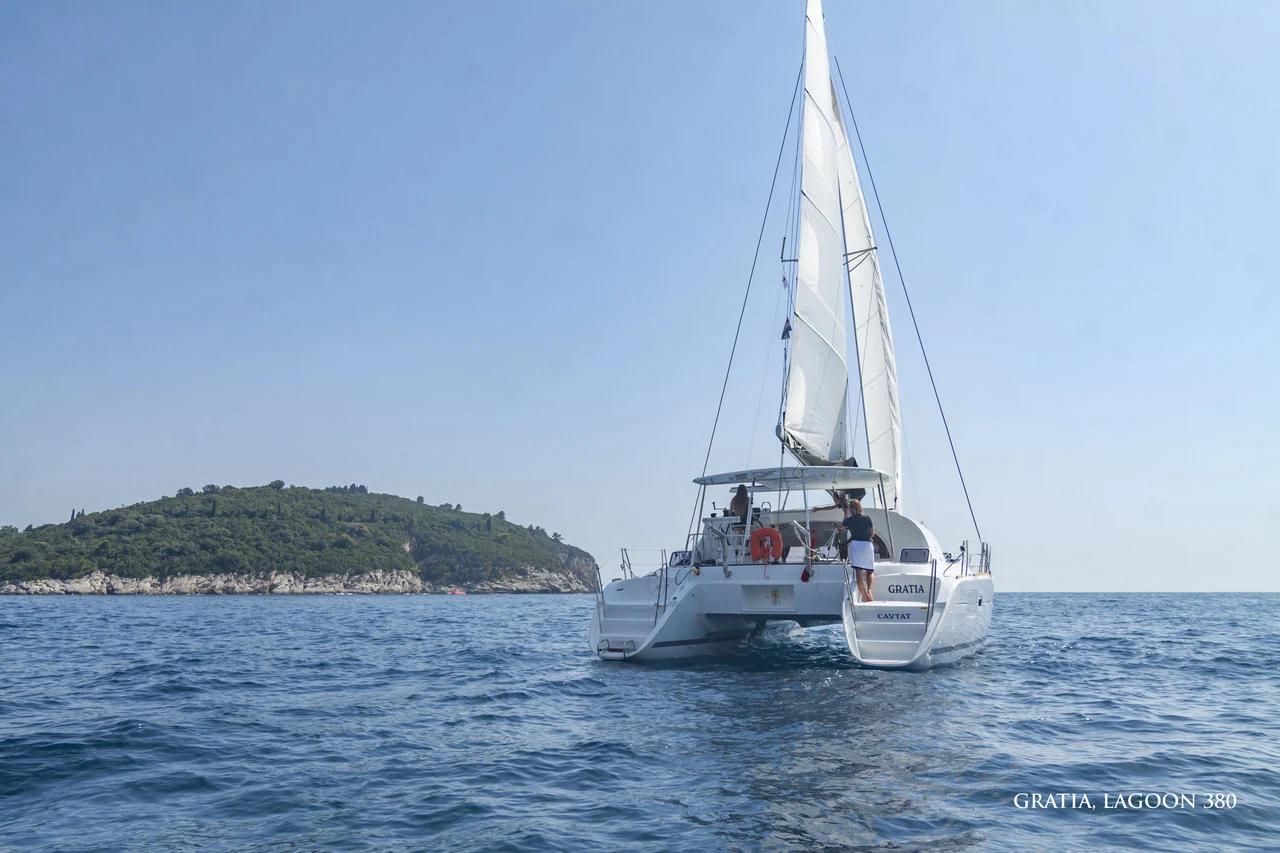

A skippered yacht charter in Croatia gives your group a private yacht operated by a professional skipper. Guests need no sailing licence. With us a skipper costs €250 a day, or €1,750 for a week, plus the skipper's food and a cabin or berth aboard; the skipper pays no tourist tax. Choose the yacht around the guest cabins left after accommodating the skipper.
That last point can change the booking. Tonka has three cabins; giving one to the skipper leaves two cabins for four guests. Her advertised maximum of eight people includes two saloon berths, so it does not describe four private guest cabins. Decide how your group wants to sleep, then match the yacht and skipper to that arrangement. The quotation lists the skipper's days and sleeping place alongside the yacht.
Your skipper and the charter booking
In a private skippered charter, your group selects the yacht and arranges a skipper to operate it. This differs from buying individual cabins on a shared departure. If you want the whole boat for your own group, make that clear in the enquiry and check that the quotation reflects it.
Bareboat is the term for hiring a yacht with the appropriate qualified person in your own crew taking responsibility for operating it. A professional skipper is useful when nobody in the group wants that role, when the yacht is outside your experience, or when you prefer someone else to manage the sailing decisions. Give the base your experience on boats of a similar size, as well as the certificate, if you are considering the bareboat option.
The licence checker distinguishes skippered guests from bareboat operators. A recognised licence does not settle practical ability: section 11 of the charter terms allows an on-water ability test. If the result is unsatisfactory, the base may terminate without a refund or require an acceptable skipper at the charterer's cost. Arrange a professional skipper at booking if nobody wants, or is ready for, responsibility for the yacht.
Book the skipper with the yacht
| Item | What to confirm before paying |
|---|---|
| Yacht charter | The exact yacht, dates, base and included equipment |
| Skipper | Daily charge, number of charged days and any separate arrangements |
| Skipper's food | How meals aboard and ashore will be handled |
| Accommodation | The agreed berth or cabin on the selected yacht |
| Compulsory extras | The items and amounts payable with the booking or at the base |
| Security deposit | The hold or payment, release conditions and remaining responsibilities |
| Week's running costs | Overnight stops, fuel, provisions and other planned spending |
Our skipper rate is €250 a day. Have the quotation state the number of paid days, including its treatment of arrival and departure. Agree meals too: include the skipper when buying food aboard and settle how dinners ashore will work, so the arrangement is clear to the group before travel.
Use the charter cost calculator to put the skipper beside the other costs of the week. Then replace the allowances with the figures in your quotation. A total that includes the skipper but leaves out the skipper's accommodation or the group's overnight spending will give each guest a misleading share.
Read the charter terms before paying. Section 1 includes the yacht, outboard engine, linen and towels in the accommodation fee; fuel is additional. Identify any other compulsory charges on the offer without counting those included items twice. Section 2 requires a security deposit and describes deductions for damage and faulty return. Hiring a skipper does not automatically remove that contractual responsibility.
Allocate cabins before choosing the boat
Draw a cabin plan with names in it. Count the people who need a private cabin, note who is willing to share, and include the skipper's agreed accommodation. If a listing offers additional saloon berths, discuss whether anyone wants to use them throughout the holiday.
The difference between a berth and a cabin matters. A berth is a sleeping place; a cabin is an enclosed sleeping compartment. A yacht advertised for a particular maximum number of people may rely on a different sleeping arrangement from the one your group expects. Get the layout and check it before treating the advertised capacity as a comfortable guest count.
A catamaran's crew accommodation may be shown separately from the main guest cabins. Ask about access and facilities, and confirm that the proposed berth is acceptable for the skipper. On Tonka, reserving one of the three cabins for the skipper leaves two for guests. Compare other boats using the same named allocation, including anyone who is prepared to use the saloon.
Leave some attention for daytime life aboard. Check the dining table, shade and how the group will get ashore. A boat that sleeps everyone can still be a poor match if there is nowhere the whole group wants to sit together.
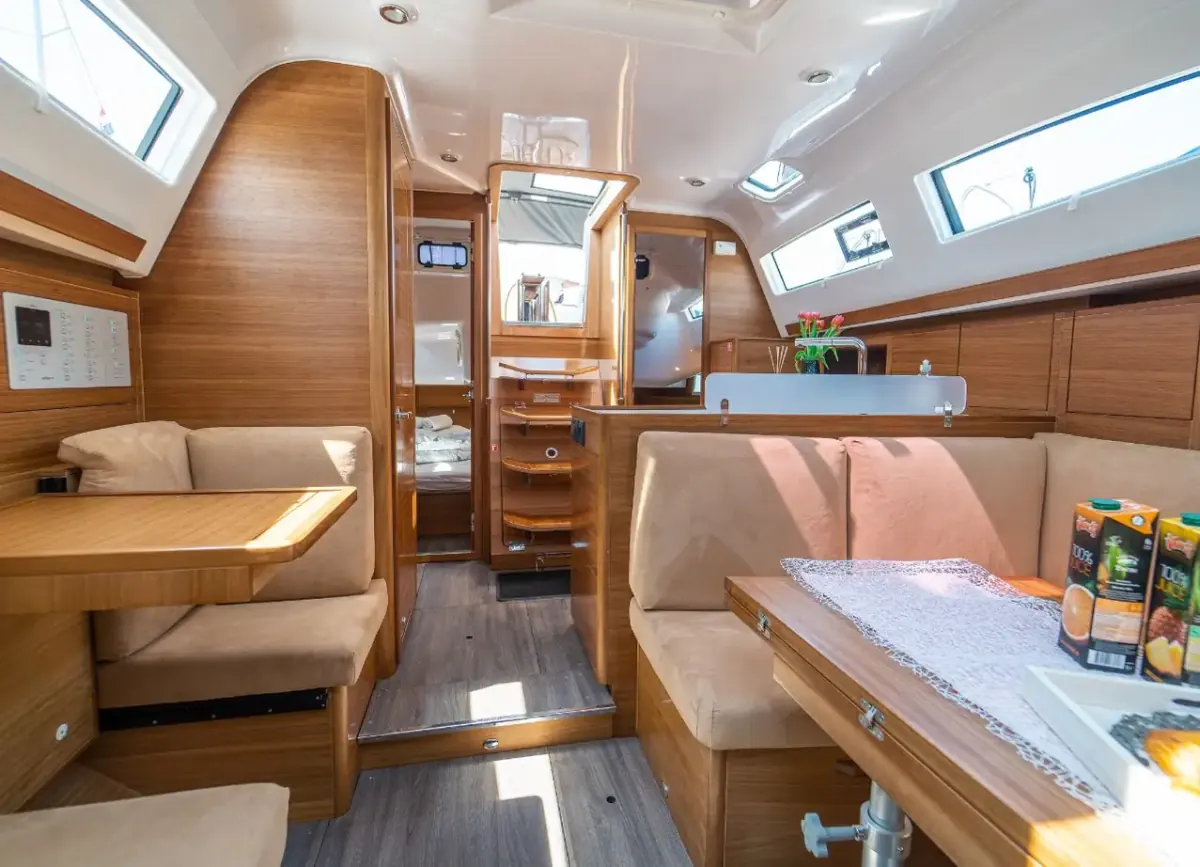
Leave space for ordinary life aboard: an unoccupied saloon can give an early riser somewhere to sit, or a tired guest somewhere to rest during the day. Filling every sleeping place can remove that flexibility. Discuss those habits before inviting the final two guests simply because the capacity allows it.
Agree the skipper's role
Describe the holiday you want in the enquiry. Say whether you are hoping to learn some sailing, spend time swimming, visit towns or keep the daily programme light. Include the age range of the group, any mobility needs and concerns about spending time at sea. These details help establish a workable plan before arrival.
Agree the expected services explicitly. Ask who will provision, prepare meals, wash up and organise shore bookings. If the group wants help with cooking or hospitality, ask for that service to be included in the quotation. List any cooking or hospitality service separately, with the person providing it and their accommodation.
If guests want to help with sailing, tell the skipper and follow the briefing on board. Establish who handles lines, who watches children and where people should be during manoeuvres. Volunteering to help should make the skipper's task easier. It should not lead to several people acting on different instructions around a moving boat.
Keep expectations about teaching realistic. Helping to hoist a sail or learning a knot during a holiday does not make the trip a qualification course. The site's terms prohibit using the yacht as a sailing school. If a certificate is your main aim, arrange an appropriate recognised course separately.
The route remains a sailing decision
Give the skipper a short list of priorities and a longer list of optional stops. Explain which places matter most and why. Someone's birthday dinner may be important, but it still needs an alternative if the planned passage or overnight berth becomes unsuitable.
The DHMZ marine forecast provides the small-craft warnings and conditions the skipper will consider alongside the boat, crew and local circumstances. The terms prohibit departure from a port or anchorage when wind is, or is forecast to be, over 30 knots, or when the authorities ban sailing. Conditions below that limit still need to suit the yacht and crew. Leave room for an extra harbour night or a shorter route.
For a first private charter, choose the base before building an ambitious island list. A week returning to the same marina can be straightforward to organise, while a one-way charter needs agreement on the boat and delivery arrangements. Any one-way finish must be part of the quotation; it changes the yacht arrangements as well as the itinerary. For an ordinary round trip, the terms require the yacht home by Friday 17:00 with full tanks, followed by Saturday 08:00 disembarkation. Give the skipper room in the programme to meet that schedule without a last-day rush.
The information to send with an enquiry
Send your dates, guest count, desired private cabins and preferred base. Say that you need a professional skipper, and identify any flexible part of the request. Mention whether the group wants a monohull or catamaran, while allowing a different layout to be suggested if it fits better.
Ask for the yacht and skipper costs together, with the compulsory extras and proposed sleeping arrangement clearly identified. Resolve any unclear item before comparing per-person totals. Keep the agreed terms with the booking documents so the person organising the group can answer questions consistently.
For four guests wanting two private cabins and a skipper, Tonka, a 2022 Elan Impression 40.1 based at Marina Kaštela, offers a concrete three-cabin monohull to discuss. Include the two-guest-cabin plan in the enquiry, together with the dates and the group's preferred pace.
Frequently asked questions
Do guests need a sailing licence on a skippered yacht charter?
Guests do not need a recreational skipper licence merely to join a charter operated by a professional skipper. The qualification requirement applies to the person operating the yacht. Tell the base that you want a skippered booking and check the separate travel-document requirements for every guest, because a skipper arrangement does not alter the visa or passport rules.
Can the skipper teach us to sail?
Yes, informally. Tell us at booking that you want to learn, then ask the skipper to let you helm, trim the sails and handle lines. It is not a course: the charter terms bar using the yacht as a sailing school, so book a recognised course separately if you want a certificate.
Does the skipper need a separate cabin?
Yes, unless the boat has crew quarters. On three-cabin Tonka the skipper takes one cabin, leaving two for four guests. Maestro, a Bali 4.6 catamaran, lists 5 + 2 cabins, so the skipper can use one of the two small crew cabins; check its access and facilities before counting every guest cabin as free.
Are cooking and shopping included with the skipper?
Not as standard. The skipper sails the boat; shopping and cooking stay with the group unless you add crew. A cook costs about €250 a day and a hostess about €160, going by a 2026 listing, and each needs a berth too. Ask for any extra service in the quotation so it shapes the choice of boat.
Can the skipper guarantee the islands on our itinerary?
No. The overnight programme needs to remain flexible around weather, the yacht, the crew and available arrangements ashore. Give the skipper your priorities and agree alternatives before departure. A reserved meal or a preferred island should not become a reason to attempt an unsuitable passage, and a shorter route can still provide the kind of week the group wanted.